AI Receptionist
I led UX end-to-end on Cisco’s AI Receptionist, shipped into Webex Control Hub while competing platforms were already shipping AI reception. The job was the surface where an admin decides what the AI is allowed to do, then finds out what it did.
context/
Enterprise cloud calling is a contested category, and competing platforms had already shipped AI receptionist agents: automated reception that routes, screens, and responds to calls. That was a credibility gap as much as a feature gap. The mandate: ship an AI Receptionist into Control Hub, the admin platform, on a compressed timeline, built so an enterprise compliance team could actually sign off on it. Which meant designing what the admin can see, allow, and shut off, not just what the AI can do.
role/
UX lead and IC end-to-end, in Cisco’s PM–Architect–UX triad. The PM owned the roadmap. I owned the admin experience, the parity-versus-differentiate calls against the category leaders, the phasing, and the per-phase feasibility calls with engineering.
what i drove/
- Product direction: defined what “AI Receptionist” means for the admin persona, not the caller. How an enterprise admin sets up, governs, monitors, and overrides AI-driven reception across their org.
- Competitive positioning: ran teardowns of competing AI reception offerings and drew the parity, skip, and differentiate lines, leaning on admin-grade configurability and compliance hooks.
- Phasing: structured the program from foundational admin setup through Beta and GA to a later vision horizon, each phase scoped to a time-to-market thesis rather than a feature wishlist.
- Feasibility: drove multi-version option exploration with engineering and AI teams, making the per-phase achievability calls.
- Engine and language tradeoffs: Beta started on US English and a single engine path. Early feedback pushed for better conversational quality and broader language coverage at once. Those strengths did not live in one option, and platform constraints meant the admin experience had to expose a real choice instead of a fake single list.
govern/
Once a call ends, “what happened” is not a single artifact. Conversation quality, tool and knowledge context, and traditional call recording often arrive from different places, with different audiences: support and AI debug on one side, compliance and call operations on the other. The design problem I owned is not prettier pages for each stream. It is whether an admin or compliance reviewer can trust one good recording and one good transcript of the same call, without the product pretending those systems already agree.
beta/
Admins would apply an instruction template and leave it there: business hours, greeting, all of it still reading like sample copy, because nothing told them to swap it for the real thing. That’s a bad first call for whoever dials in. The fix was a banner, not a redesign: flag the placeholder text and prompt the admin to replace it before the receptionist goes live. Small, but it came out of Beta feedback and my own runs through the setup, not a hypothetical.
outcome/
- Phase 1 foundational setup and Beta shipped.
- General Availability in May 2026.
- Follow-on work after GA focused on deeper control, handoff context, and compliance-oriented records of what the AI did, scope I helped shape with product and engineering.
- Phase 3 vision prepared for Cisco Live, June 2026. Worked three use cases to a presentable functional outcome. Did not present on stage.
vision/
- Agentic configuration: exploring whether an admin could configure the receptionist by chatting with an agent inside Control Hub instead of only clicking through forms. We proved a working slice with product and engineering as a time-boxed feasibility exploration ahead of Cisco Live, labeled exploration, not GA.
- Integrations by job-to-be-done: raw integration and tool names mean little to most admins. I explored packaging capabilities by use case (for example scheduling) so the right underlying tools attach together, instead of forcing a menu of opaque names.
- Optimize: because receptionist quality tracks the instructions and config an admin writes, I explored assistive “review and improve this setup” directions, including a narrow path focused on the instructions field first.
- A personal-concierge direction in the Webex app sat alongside as a separate exploration track. I note it for completeness; it is not a case I own end-to-end.
the surface/
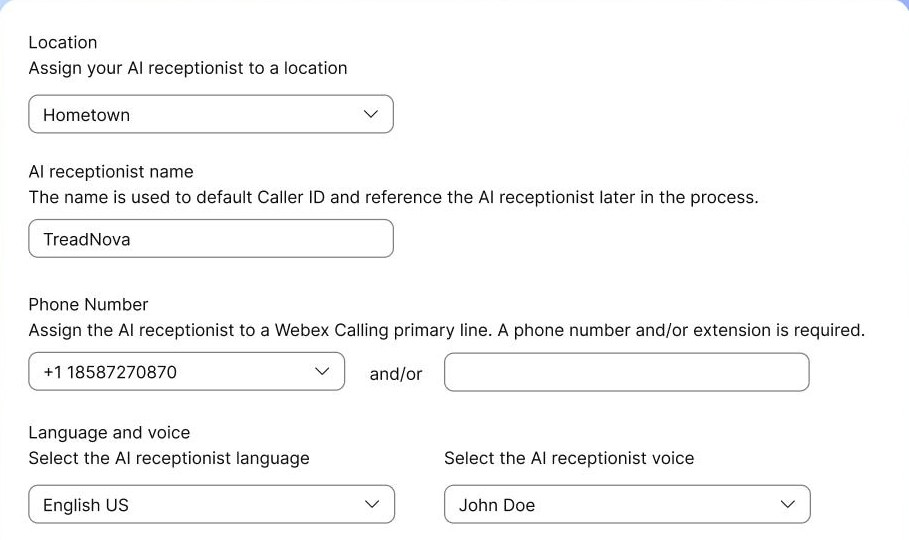
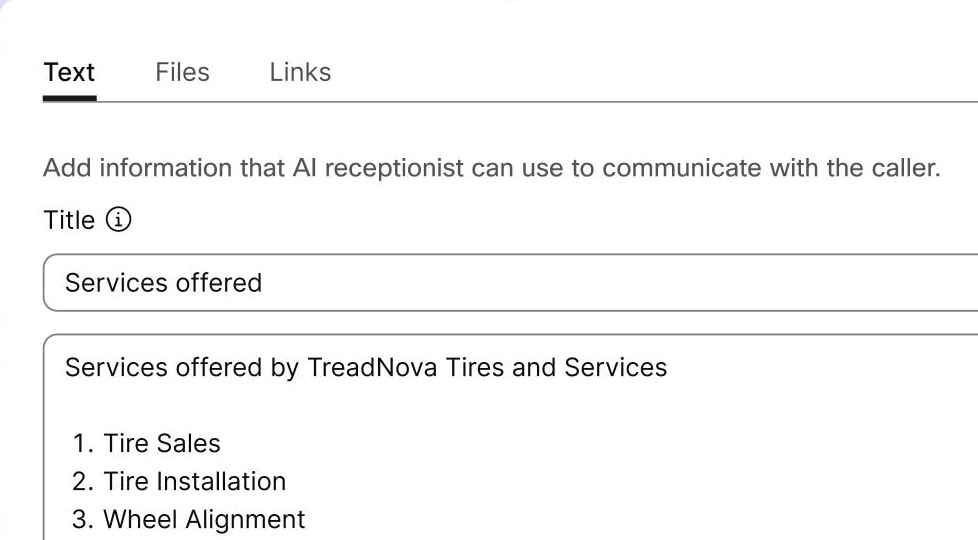
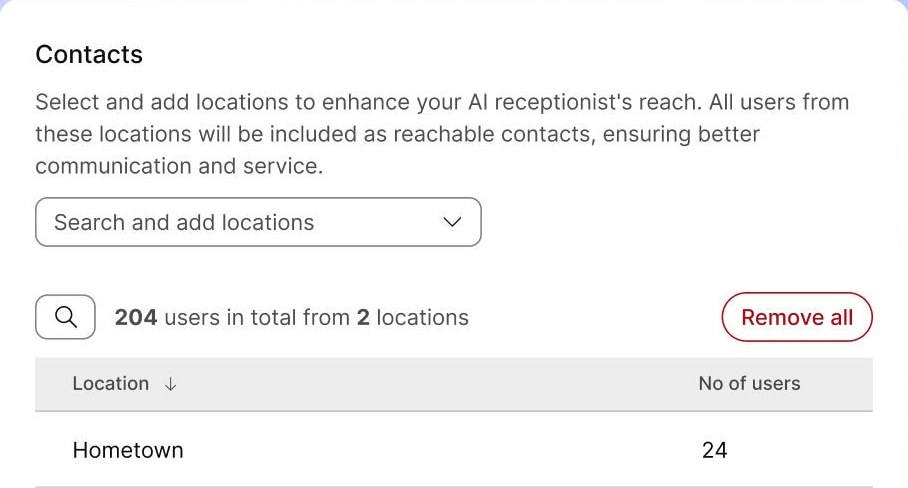
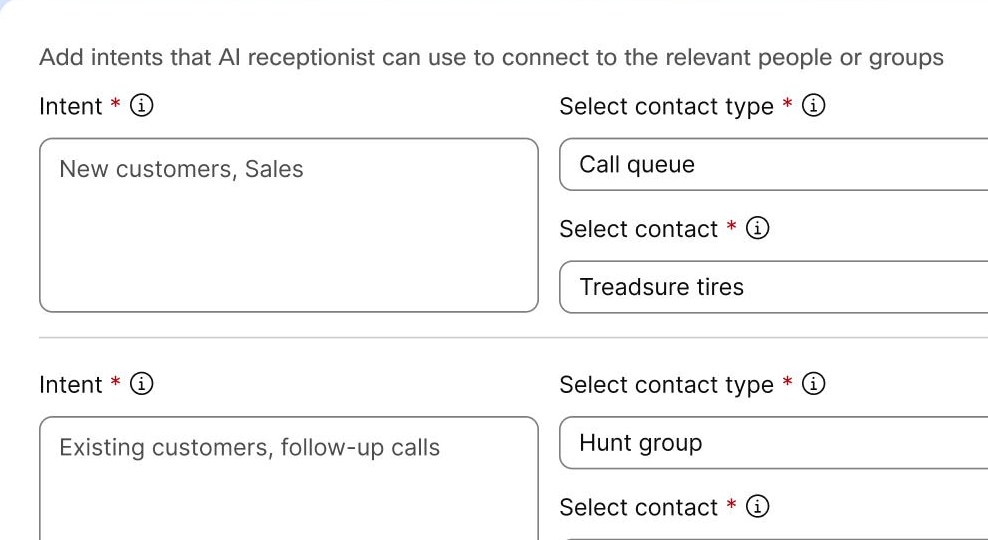
What the admin actually touches, in setup order. Every screen here is a place where someone decides what the AI may do on their org’s behalf.